

Pecunia Non Olet
May 26, 2026
By Sara Lopez Vázquez
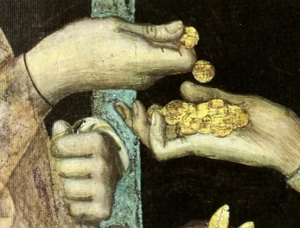
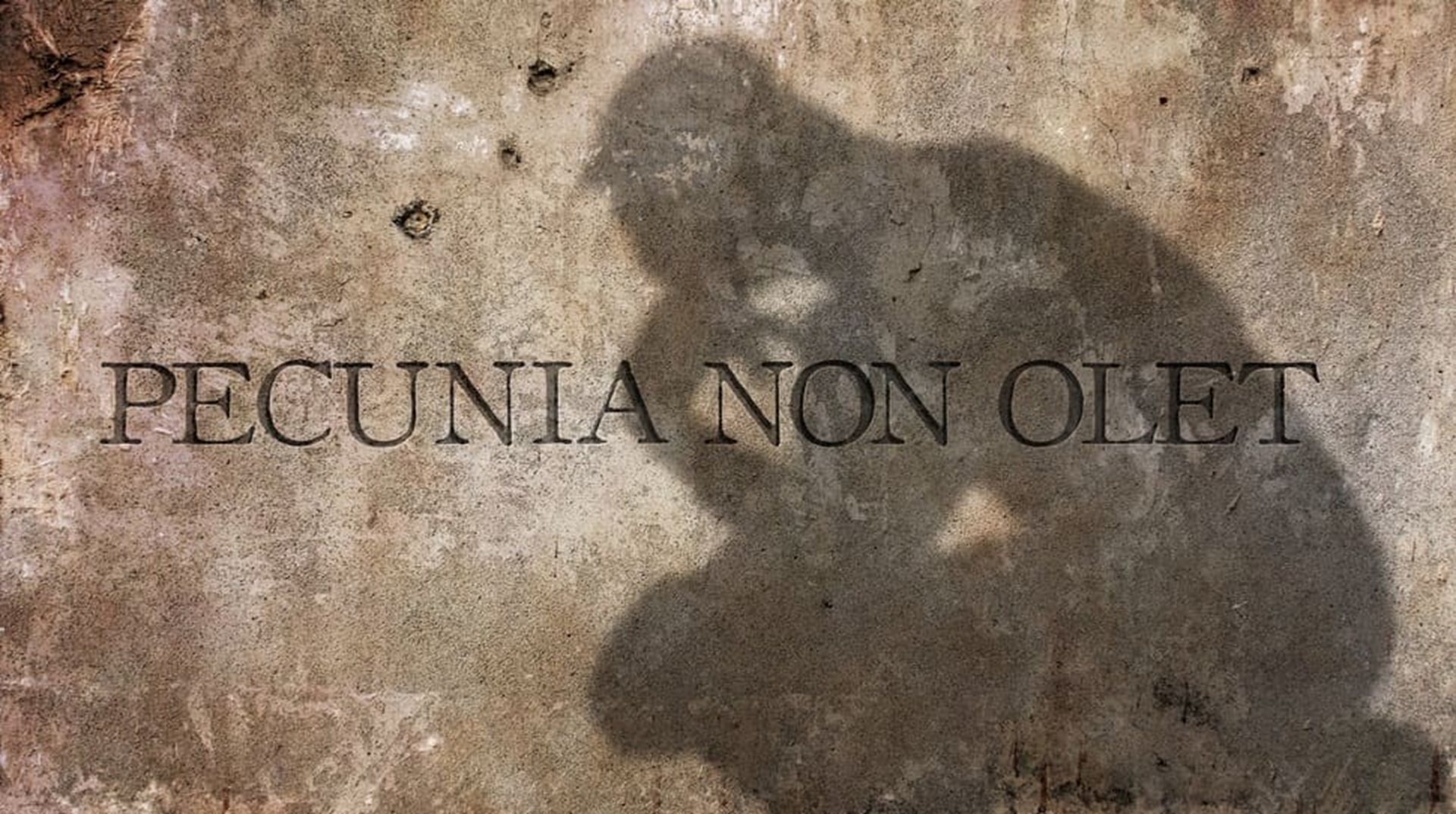
The Latin expression non olet—»it doesn’t smell»—encapsulates one of the most uncomfortable truths in economic history: once money becomes a medium of exchange, it seems to lose all connection to its origin. It doesn’t matter where it comes from; what matters is that it circulates, generates returns, and yields profit. The Roman emperor Vespasian used this argument to justify a tax on public latrines when his son Titus criticized him for obtaining a profit from such sources. Today, two thousand years later, this logic remains intact in much of the financial industry.
Contemporary investment has achieved remarkable sophistication in risk analysis; the same cannot be said of its attention to the origin of the capital that generates that profit. The market continues to evaluate companies based on their margins, growth, or cash flow generation capacity, while the question of how that profit is obtained is frequently relegated to the background. As if profitability could be morally isolated from the activities that generate it.
Ferlosio saw in the «non olet» not a mere anecdote, but a mechanism of erasure and concealment. Money loses the «smell» of its origin because the system needs it to. Only in this way can it circulate without ethical friction. Only in this way is it possible for profits derived from deeply controversial industries to end up seamlessly integrated into investment portfolios, pension funds, or mass-marketed financial products.
The issue is not new, but it does take on a different dimension in a context where value chains are increasingly complex and opaque. Today, capital can indirectly finance activities linked to the arms industry, gambling, the exploitation of personal data, or sectors that degrade human dignity without the investor even realizing it. The distance between the origin and destination of money functions as a mechanism of absolution: the more intermediated the profit, the easier it is to consider it devoid of moral implications.
However, financial neutrality is, to a large extent, a fiction. Every investment involves an allocation of capital and, therefore, a stance on which economic models are strengthened and which are not. As the Mensuram Bonam document points out, no investment is morally neutral. Therefore, when the only truly determining criterion is profitability, «non olet» ceases to be a Latin expression and becomes an economic culture: the culture of indifference to the source of profit.
This does not mean that investment should become an exercise in impossible moral purity. Economic reality will always be complex and full of gray areas. But precisely for this reason, it is insufficient to limit ethical analysis to superficial classifications or standardized ESG labels. The real challenge lies in recovering the question that the market tends to silence: not only how much profit an activity generates, but how it generates it and what consequences it produces.
Because perhaps the problem of our time is not that money smells bad, but that we have learned to stop noticing the smell.